



6th Congress of the Traffic Psychology Division
Call for Contributions
The Traffic Psychology Division invites you to its 6th Division Conference on 17–18 February 2027 at the Zurich University of Applied Sciences.
We welcome contributions to the conference. Submissions may be made in German or English. Further information, including the abstract template, can be found at https://tagung-verkehrspsychologie-2027.ch/.
The deadline for submissions to verkehrspsychologie.p@--no-spam--zhaw.ch is 30 November 2026. Feedback is expected by 15 December 2026.
Attendance at the conference is free of charge for members of the DGPs’ Working Group on Traffic Psychology (non-members: €55). Further information about the conference will be posted on the event’s website.
19th PhD Workshop organised by the Traffic Psychology Division
Thank you very much!
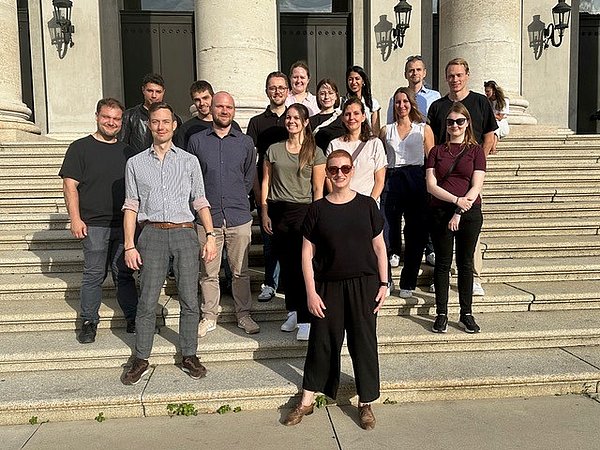
On 2 and 3 September 2026, the 19th Early-Career Workshop organised by the Traffic Psychology Division of the German Psychological Society (DGPs) took place at the University of the German Armed Forces in Munich.
Doctoral students, postdocs and professors from German-speaking countries came together to discuss current research, exchange experiences and forge new contacts. The workshop centred on seven specialist presentations by Early Career Researchers on current topics in Traffic Psychology. The programme was complemented by short keynote talks, a presentation on open science as a tool for a successful PhD, and insights into the day-to-day working life of a postdoctoral researcher in a highly interdisciplinary team.
Many thanks to the Traffic Psychology team at the University of the German Armed Forces in Munich for organising this workshop.
18th PhD Workshop organised by the Transport Psychology Division
Vielen Dank!

New ideas, stimulating discussions and plenty of opportunities for exchange: this is what the 18th PhD Workshop organised by the German Psychological Society’s (DGPs) Transport Psychology Division had to offer, which took place on 3 and 4 September 2025 in Bonn with around 30 participants.
In terms of content, the range of topics covered by the projects presented stretched from assessing fitness to drive, through the design of assisted and automated driving, the behavior of cyclists and safety culture in the rail sector, to the role of light and lighting in driving comfort and road safety. In addition, there was a panel discussion on career prospects and the future of transport psychology, as well as a keynote address on transport psychology across the lifespan.
A big thank you to the Bonn organising team from the Department of Social and Psychology and Law, who ensured the workshop was a complete success!
5th Congress of the Transport Psychology Division
19./20.03.2025, TU München (Garching) - Vielen Dank!
On 19 and 20 March 2025, the Division’s 5th conference took place at the Technical University of Munich (Garching Campus). A total of 40 oral and poster presentations showcased current research – including topics such as distraction and inattention, automated driving, mobility behaviour and methodological research questions. The keynote speech by Mark Vollrath provided an overarching framework, in which he looked back over the last two decades or so of German-language traffic psychology. Around 70 participants took the opportunity to engage in in-depth professional discussion. Our special thanks go to Klaus Bengler and his team from the Chair of Ergonomics (in particular Anna Eckl) for organising and running the conference.
The abstract book containing all the papers can be found here.
17th PhD Workshop organised by the Transport Psychology Division
Vielen Dank!

A big thank you to the approximately 50 transport psychologists who took part in the 17th PhD Workshop organised by the Transport Psychology Division of the German Psychological Society (DGPs) in Ulm from 8 to 10 October!
A wide range of PhD projects was presented, covering topics such as distraction and inattention, automated driving, mobility behaviour, and methodological issues. These presentations were accompanied by a panel discussion on academic career paths (many thanks to the experienced researchers who contributed) and a keynote address on the current state of research in traffic psychology regarding micromobility.
Many thanks to the team at the Human Factors Department at the University of Ulm, who made this workshop such a great success!
There are plans to hold another workshop next year. The divisions would welcome expressions of interest from potential organisers.
Overview
Traffic psychology examines people’s experiences and behavior within traffic, transportation, and mobility systems, as well as the underlying psychological processes. This includes, in particular, individual behavior in traffic situations (e.g., adjusting speed to traffic conditions, pedestrians’ use of crosswalks) and its connection to accidents or hazardous situations. In addition, traffic psychology also addresses general issues related to human mobility (e.g., choice of transportation mode) and the user-friendly design of transportation modes and infrastructure. Another important subfield is the consideration of psychological aspects in the design of transportation-related workplaces and in the organization of work activities (e.g., team resource management for ship or aircraft crews, break schedules for professional drivers). Learn more here.
The “Traffic Psychology” Division works to raise the profile of the discipline within psychology and to promote interdisciplinary communication; it connects researchers and supports early-career scholars. It currently has over 100 members. Learn more...
As a division, we are committed to fostering connections among our members as well as promoting our subdiscipline to the outside world. We organize conferences and conventions. Learn more about our activities here.
Young Researcher Development is a top priority for the division: We host an annual workshop for young researchers! Click here for more information.