


The willing acceptance of, and the often deeply entrenched belief in, conspiracy theories pose a problem for democratic societies, as they undermine trust in democratic institutions and processes – for example, when sections of the German population regard the coronavirus protection measures (the appropriateness of which can, of course, be critically debated!) as tools in a deliberate plot to establish a dictatorship, or when millions of Americans continue to believe, without any reliable evidence, that the presidential election was ‘stolen’.
What is meant by conspiracy theories and a conspiracy mindset?
A conspiracy theory explains an event or circumstance by reference to secret agreements made by a group of people for their own benefit and to the detriment of the general public. A general tendency amongst people to explain the world through conspiracy theories is referred to as a conspiracy mentality.
Example: The claim that the disease COVID-19 does not exist at all is only a conspiracy theory if it is not based on the assumption of a scientific error, but rather on the deliberate actions of a group operating in secret, which claims the disease exists against their better judgement in order to gain an advantage from it.
Members of the task force
The four researchers focus their work on conspiracy theories and/or fake news. On behalf of the DGPs Executive Board, the task force is coordinated by Stefan Schulz-Hardt (former President of the DGPs, University of Göttingen). As a first step, the task force has compiled the current state of academic research on conspiracy theories and presented it in the form of FAQs. Practical recommendations on how to deal with conspiracy theories and their supporters in everyday life will follow.
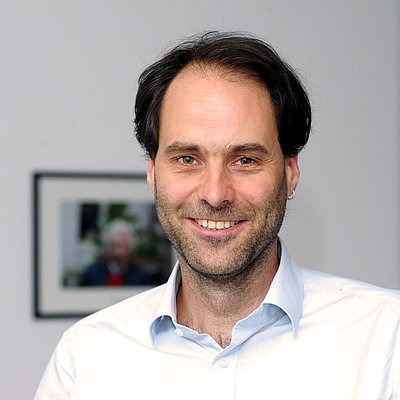
Prof. Dr. Roland Imhoff
Chair in Social and Psychology and Law
Johannes Gutenberg University Mainz
Roland Imhoff’s research focuses on categorisation, stereotypes and prejudices, representations of history, and comparative judgements.
In the context of conspiracy theories, he investigates in particular the cognitive and behavioural correlates of a conspiracy mindset.
Photo: Friederike Henschel
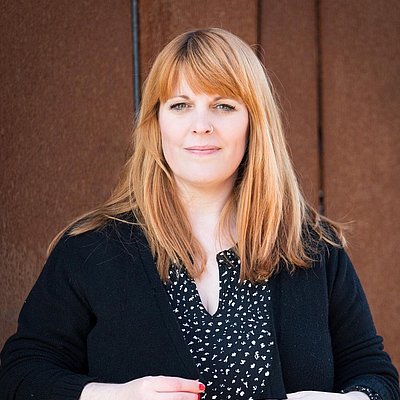
Pia Lamberty
Managing Director at the Centre for Monitoring, Analysis and Strategy (CeMAS)
Mainz
Pia Lamberty is a PhD student at Johannes Gutenberg University Mainz and Managing Director at the Centre for Monitoring, Analysis and Strategy (CeMAS). Her current research focuses on social media and the role it plays in society. In the context of conspiracy theories, she is examining the intertwining of social media and belief in conspiracies, particularly during the pandemic.
Photo: Daniel Pasche
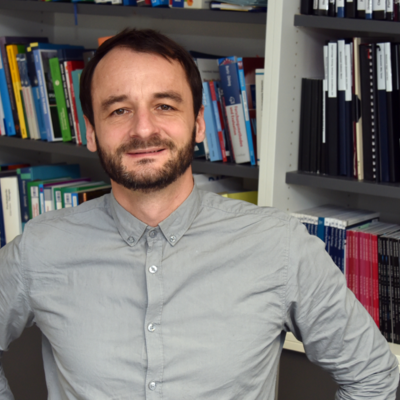
Prof. Dr. Tobias Rothmund
Professor of Communication and Media Psychology
Friedrich Schiller University of Jena
Tobias Rothmund’s research focuses on individual differences in political thought and behaviour, as well as the emergence of conflict and Cooperations in digital communication spaces. In the context of conspiracy theories, he investigates how people engage with scientific evidence based on their motivations and examines the efficacy of interventions designed to strengthen resilience to disinformation.
Photo: Anne Günther, FSU Jena

Prof. Dr. Stephan Winter
Professor of Media Psychology
University of Koblenz-Landau
Stephan Winter’s research focuses on information selection, as well as opinion formation and expression in digital media.
In the context of conspiracy theories, he examines the impact of fake news and the role of social media platforms and instant messaging services.
Photo: private

Prof. Dr. Stefan Schulz-Hardt
Professor of Economic and Social Psychology
Georg-August University of Göttingen
Stefan Schulz-Hardt is a professor of economic and social psychology at the Georg-August University of Göttingen. In this role, he coordinates the work of the task force and acts as the liaison with the DGPs Executive Board. His research focuses on judgement and decision-making processes in groups, how people deal with advice, and becoming entangled in omissions.
Photo: Dr. Peter Zezula, Göttingen
FAQs on conspiracy theories and the conspiracy mindset
Conspiracy theories and a conspiracy mindset – what are they?
A conspiracy theory is when people believe that an event has come about as a result of secret agreements made by a group of people, for their own benefit and to the detriment of the general public.
For example: if people believe that the disease COVID-19 does not actually exist, that in itself is not yet a conspiracy theory. This belief becomes a conspiracy theory when one assumes that a group acting in secret has invented the existence of this disease, against their better judgement, in order to gain an advantage from it.
Some people generally tend to explain the world through conspiracy theories. We then speak of a conspiracy mentality[1].
[1] Imhoff, R., & Bruder, M. (2014). Speaking (un-)truth to power: Conspiracy mentality as a generalised political attitude. European Journal of Personality, 28, 25–43.
No. Conspiracy theories can be true—namely, when an event is actually the result of a secret agreement that harms the general public. After all, conspiracies do sometimes exist. For example, the suspicion that Volkswagen managers and engineers colluded to install software designed to manipulate emissions in diesel vehicles so they would perform better on test benches has been well documented in court and is therefore a conspiracy theory that corresponds to the truth. However, many widespread conspiracy theories are difficult to verify because the alleged events take place in secret. Furthermore, supposed contradictions are often embedded in the narrative, e.g., as diversionary tactics or deliberate misinformation (e.g., “The reason there is so little evidence of serious vaccine side effects is simply that the relevant Studies are being censored.”). For very few conspiracy theories is it clear under what circumstances they could be considered disproved. For this reason, conspiracy theories often have the status of beliefs—that is, unverifiable convictions—rather than that of scientific theories.
People differ in the degree to which they agree with specific conspiracy theories and a conspiracy-theory-based worldview. So there is no blanket agreement or disagreement; rather, agreement can take many forms. That’s why statements like “10% of the population believes in conspiracy theories” are rather arbitrary, because they depend on where you set the “cut-off” point at which someone is considered to truly believe in a conspiracy theory.
Nevertheless, trends in increase or decrease can be estimated by, for example, examining how the average level of agreement with conspiracy theories or the average level of conspiracy-mindedness changes over time. The available scientific data on conspiracy-mindedness spans a period of just under ten years and shows no increase whatsoever since 2012. [1]
[1] www.joeuscinski.com/uploads/7/1/9/5/71957435/over_time.pdf
There are numerous reasons to believe in conspiracy theories. Psychological research generally assumes that conspiracy theories are embraced because they satisfy fundamental human needs [1]. Identifying culprits (which is, after all, an essential element of conspiracy theories) can make the world seem more predictable and, therefore, more controllable. Possessing exclusive, secret knowledge and having seen through a conspiracy can also give people the feeling of being special, thereby satisfying their need for uniqueness and self-worth [2, 3].
[1] Douglas, K. M., Sutton, R. M., & Cichocka, A. (2017). The psychology of conspiracy theories. Current Directions in Psychological Science, 26(6), 538–542.
[2] Imhoff, R. & Lamberty, P. (2017). Too special to be duped: Need for uniqueness motivates conspiracy beliefs. European Journal of Social Psychology, 47, 724–734.
[3] Lantian, A., Muller, D., Nurra, C., & Douglas, K. M. (2017). I know things they don’t know! Social Psychology, 48(3), 160–173. doi.org/10.1027/1864-9335/a000306
One reason people believe in conspiracy theories is that they satisfy fundamental human needs [1]. For example, people who experience themselves as having low self-efficacy and feel they have little control over their lives tend to agree with conspiracy theories because this gives them a certain sense of control (they know who the “culprits” are) [2]. But people with a strong need to recognize patterns [3], make connections, and discern intent behind events [4] (e.g., even in natural phenomena [5]) also show a higher level of agreement. The same can be said for people who want to be unique and special [6, 7]. There is no robust evidence that men and women differ in this regard, but there is evidence that people with lower levels of education are more likely to agree with conspiracy theories [8, 9]. According to current research, this is primarily because people with less formal education perceive less control over their own lives [9].
[1] Douglas, K. M., Sutton, R. M., & Cichocka, A. (2017). The psychology of conspiracy theories. Current Directions in Psychological Science, 26(6), 538–542.
[2] Imhoff, R., & Lamberty, P. (2018). How paranoid are conspiracy believers? Towards a more fine-grained understanding of the connection and disconnection between paranoia and belief in conspiracy theories. European Journal of Social Psychology, 48, 909–926.
[3] Van Prooijen, J. W., Douglas, K. M., & De Inocencio, C. (2018). Connecting the dots: Illusory pattern perception predicts belief in conspiracies and the supernatural. European Journal of Social Psychology, 48(3), 320–335.
[4] Douglas, K. M., Sutton, R. M., Callan, M. J., Dawtry, R. J., & Harvey, A. J. (2016). Someone is pulling the strings: Hypersensitive agency detection and belief in conspiracy theories. Thinking & Reasoning, 22(1), 57–77.
[5] Imhoff, R., & Bruder, M. (2014). Speaking (un-)truth to power: Conspiracy mentality as a generalized political attitude. European Journal of Personality, 28, 25–43.
[6] Imhoff, R., & Lamberty, P. (2017). Too special to be duped: Need for uniqueness motivates conspiracy beliefs. European Journal of Social Psychology, 47, 724–734.
[7] Lantian, A., Muller, D., Nurra, C., & Douglas, K. M. (2017). I know things they don’t know!. Social Psychology, 48(3), 160–173. doi.org/10.1027/1864-9335/a000306
[8] Imhoff, R., Zimmer, F., Klein, O., António, J. H. C., Babinska, M., Bangerter, A., Bilewicz, M., Blanuša, N., Bovan, K., Bužarovska, R., Cichocka, A., Delouvée, S., Douglas, K. M., Dyrendal, A., Gjoneska, B., Graf, S., Gualda, E., Hirschberger, G., Kende, A., Kutiyski, Y., ..., & van Prooijen, J.-W. (2022). Conspiracy mentality and political orientation across 26 countries. *Nature Human Behavior*.
[9] van Prooijen, J. W. (2017). Why education predicts decreased belief in conspiracy theories. Applied Cognitive Psychology, 31(1), 50–58.
Situations that make people feel they have little control over their lives (for example, unemployment [1] or the defeat of their preferred political party in major elections [2]) lead to greater acceptance of conspiracy theories. Although this should, in principle, also apply to exceptional social situations, a study from Germany conducted during the COVID-19 pandemic found no increase in belief in a general global conspiracy [3].
[1] Imhoff, R. (2015). Beyond (right-wing) authoritarianism: Conspiracy mentality as an incremental predictor of prejudice. In M. Bilewicz, A. Cichocka, & W. Soral (Eds.), The Psychology of Conspiracy (pp. 122–141). London: Routledge.
[2] Imhoff, R., Zimmer, F., Klein, O., António, J. H. C., Babinska, M., Bangerter, A., Bilewicz, M., Blanuša, N., Bovan, K., Bužarovska, R., Cichocka, A., Delouvée, S., Douglas, K. M., Dyrendal, A., Gjoneska, B., Graf, S., Gualda, E., Hirschberger, G., Kende, A., Kutiyski, Y., ..., & van Prooijen, J.-W. (2022). Conspiracy mentality and political orientation across 26 countries. *Nature Human Behavior*.
[3] Roose, J. (2020). Conspiracy in the Crisis. In Representative Surveys on Belief in Conspiracy Theories Before and During the COVID-19 Crisis. Konrad Adenauer Foundation, Forum for Empirical Social Research. Berlin. www.kas.de/documents/252038/7995358/Verschw%C3%B6rung+in+der+Krise.pdf/7703c74e-acb9-3054-03c3-aa4d1a4f4f6a
To date, there has been very little research on which approaches are most helpful when dealing with conspiracy theorists. Most of what is known on this topic comes from practical experience, such as that of counseling centers. Anyone who finds themselves confronted by people who spread conspiracy theories can start by asking themselves the following questions:
- How deeply is the conspiracy theory embedded in the person’s worldview? Did the friend or relative simply not pay close attention and therefore spread fake news, or is this someone with a closed worldview? The less closed the worldview is, the more facts will help.
- How close are you to this person? Is this a casual (digital) acquaintance, or someone very close to you? The better and deeper the relationship, the more likely you are to be seen as a trustworthy source and still be able to reach the other person.
- What resources are available—that is, how much time and energy are you willing and able to devote to this? It’s often particularly difficult for family members when loved ones suddenly start seeing evil forces at work everywhere. That’s precisely why it’s important to be mindful of setting boundaries. Anyone who notices that family members or close friends are increasingly suspecting conspiracies everywhere (i.e., developing a conspiracy mindset) and suffering as a result should contact counseling centers that can help discuss individual coping strategies. The “veritas” counseling center in Berlin, for example, specializes in counseling family members. In the federal states, there are church-affiliated cult counseling centers; in North Rhine-Westphalia, Baden-Württemberg, and Berlin, there are also cult counseling services that are not affiliated with any church. The so-called Mobile Counseling Services Against Right-Wing Extremism also provide support in the states when it comes to developing strategies. There are now also several online resources available. The online game “Talk to Me” (https://www.talktome.games/) aims to help people feel more confident in dealing with conspiracy theorists in their own social circles.
Conspiracy theories are more accessible on social media than in traditional media [1]. For example, anyone searching for YouTube videos on climate change, scrolling through Instagram posts tagged with #corona, or searching Google for information on vaccinations is likely to come across conspiracy theory content among the suggested posts [2, 3, 4]. In addition, forums or groups/channels on instant messaging apps such as Telegram or WhatsApp make it easy to connect with like-minded people and exchange content in a private space. Telegram, in particular, is considered an important channel for spreading conspiracy theories and connecting their followers.
Social media is therefore often a source where conspiracy content appears or is discussed. However, it is not yet clear to what extent intensive use of social media also leads to a reinforcement of conspiracy-mindedness and, if so, which communication processes (e.g., in closed groups) contribute to this.
[1]: Del Vicario, M., Bessi, A., Zollo, F., Petroni, F., Scala, A., Caldarelli, G., Stanley, H. E., & Quattrociocchi, W. (2016). The spreading of misinformation online. Proceedings of the National Academy of Sciences, 113, 554–559. doi.org/10.1073/pnas.1517441113
[2]: Allgaier, J. (2019). Science and environmental communication on YouTube: Strategically distorted communications in online videos on climate change and climate engineering. Frontiers in Communication, 4, 1–15. doi.org/10.3389/fcomm.2019.00036
[3]: Quinn, E. K., Fazel, S. S., & Peters, C. E. (2020). The Instagram infodemic: Cobranding of conspiracy theories, Coronavirus disease 2019, and authority-questioning beliefs. Cyberpsychology, Behavior, and Social Networking. doi.org/10.1089/cyber.2020.0663
[4]: Briones, R., Nan, X., Madden, K., & Waks, L. (2012). When vaccines go viral: An analysis of HPV vaccine coverage on YouTube. Health Communication, 27, 478–485. doi.org/10.1080/10410236.2011.610258
In communication studies, “fake news” refers to content deliberately disseminated (mostly on social media) that contradicts verifiable facts but is intended to appear as if it were “real” news [1]. It often involves secret machinations by powerful groups, so that fake news may contain conspiracy theories or at least elements of conspiracy theories. However, the concepts are not identical: “fake news” can also cover other topics, and conspiracy theories are not always disseminated in the form of “fake news.” Initial studies, however, show a clear connection: people with a pronounced conspiracy mindset are more likely to regard science-related “fake news” as credible [2, 3].
[1]: Lazer, D. M. J., Baum, M. A., Benkler, Y., Berinsky, A. J., Greenhill, K. M., Menczer, F., Metzger, M. J., Nyhan, B., Pennycook, G., Rothschild, D., Schudson, M., Sloman, S. A., Sunstein, C. R., Thorson, E. A., Watts, D. J., & Zittrain, J. L. (2018). The science of fake news. Science, 359, 1094–1096. doi.org/10.1126/science.aao2998
[2]: Halpern, D., Valenzuela, S., Katz, J., & Miranda, J. P. (2019). From belief in conspiracy theories to trust in others: Which factors influence exposure, believing, and sharing fake news. In G. Meiselwitz (Ed.), Social Computing and Social Media. Design, Human Behavior, and Analytics. Springer International Publishing.
[3]: Landrum, A. R., & Olshansky, A. (2019). The role of conspiracy mentality in denial of science and susceptibility to viral deception about science. Politics and the Life Sciences, 38, 193–209. doi.org/10.1017/pls.2019.9
In conspiracy theory discussions about the COVID-19 pandemic, it is also striking that references are made to professionals and experts with academic titles. At the same time, there is skepticism toward those experts who represent the scientific mainstream and/or are (supposedly) close to the government. Studies have shown that people with a pronounced conspiracy mindset generally view experts whom they consider part of the elite or perceive as powerful as less credible [1]. In contrast, they attribute greater credibility to scientific outsiders or bloggers than do people with a lower level of conspiracy mentality. While most people generally trust experts more than laypeople, this difference is reduced among people with a higher level of conspiracy mentality.
[1]: Imhoff, R., Lamberty, P., & Klein, O. (2018). Using power as a negative cue: How conspiracy mentality affects epistemic trust in sources of historical knowledge. Personality and Social Psychology Bulletin, 44, 1364–1379. doi.org/10.1177/0146167218768779
The content of conspiracy theories (e.g., QAnon, microchips in vaccines) is sometimes also covered in journalistic media, often as fact-checking pieces with corrective information or as a discussion of a social issue [1]. One might assume that certain characteristics of conspiracy theories (e.g., their negative nature, newsworthiness, and entertainment value) cause them to be regarded as interesting within the logic of journalistic work. Even though they are almost never disseminated without commentary in journalistic reports, it is conceivable that this is what initially sparks an interest in conspiracy theories among some people. However, previous studies tend to suggest that people who use traditional media more frequently exhibit less belief in conspiracy theories [2].
[1]: Tsfati, Y., Boomgaarden, H. G., Strömbäck, J., Vliegenthart, R., Damstra, A., & Lindgren, E. (2020). Causes and consequences of mainstream media dissemination of fake news: Literature review and synthesis. Annals of the International Communication Association, 44, 157–173. doi.org/10.1080/23808985.2020.1759443
[2]: Stempel, C., Hargrove, T., & Stempel, G. H. (2007). Media use, social structure, and belief in 9/11 conspiracy theories. Journalism and Mass Communication Quarterly, 84, 353–372. doi.org/10.1177/107769900708400210
The origins of individual conspiracy theories are often difficult to pinpoint. While some narratives (particularly those regarding alleged Jewish influence) are very old, newer conspiracy theories about news events are often spread via social media. Research on “fake news” assumes that its dissemination stems from conviction, with the goal of influencing others, or from commercial motives (ad revenue generated by click counts). The usual goals of expressing opinions online (a: to inform others about a topic, b: to convince others of a particular position, c: to present oneself in a positive light [1]) are, in principle, also plausible for people who spread conspiracy theories; however, there is no conclusive evidence on this point. Network analyses of communication processes on social media show that the exchange of information about conspiracy theories occurs predominantly within homogeneous groups [2].
[1]: Winter, S., & Neubaum, G. (2016). Examining characteristics of opinion leaders in social media – A motivational approach. Social Media + Society, 2, 1–12. doi:10.1177/2056305116665858
[2]: Bessi, A., Coletto, M., Davidescu, G. A., Scala, A., Caldarelli, G., & Quattrociocchi, W. (2015). Science vs. Conspiracy: Collective Narratives in the Age of Misinformation. PLOS ONE, 10, e0118093. doi.org/10.1371/journal.pone.0118093
Conspiracy theories can serve the public good in certain cases, namely when they lead to the exposure of actual conspiracies (e.g., through so-called whistleblowers such as Edward Snowden). They become problematic, however, when they lead to behaviors that are harmful to individuals or the general public. For example, conspiracy theories about the COVID-19 vaccine can lead to fewer people getting vaccinated, which in turn puts others at risk and prevents protective measures from being lifted. Conspiracy theories are also problematic because they are often linked to a propensity for violence [1] and extreme political beliefs [2]. Furthermore, a general conspiracy mindset and the associated fundamental distrust of political and social actors can poison the atmosphere of conversation and undermine rational discourse.
[1]: Imhoff, R., Dieterle, L., & Lamberty, P. (2021). Resolving the puzzle of conspiracy worldview and political activism: Belief in secret plots decreases normative but increases nonnormative political engagement. Social Psychological and Personality Science, 12(1), 71–79.
[2]: Krouwel, A., Kutiyski, Y., Van Prooijen, J. W., Martinsson, J., & Markstedt, E. (2017). Does extreme political ideology predict conspiracy beliefs, economic evaluations, and political trust? Evidence from Sweden. Journal of Social and Political Psychology, 5(2), 435–462.
Why is it so hard to convince someone not to believe in a conspiracy theory using logical arguments?
There are two fundamental problems when attempting to change someone’s belief in a conspiracy theory through reasoning. First, conspiracy theories are generally difficult to disprove because, by their very nature, they refer to events that take place in secret. In this sense, the lack of evidence for such a conspiracy is sometimes even interpreted as a sign that the conspiracy is particularly well-executed. And second, the assessment of arguments is influenced by belief in the conspiracy theory itself. For example, anyone who believes that the government systematically manipulates the population through so-called chemtrails is unlikely to place much trust in a scientific refutation of this belief. After all, such expert reports are worthless if the scientists either belong to the conspiratorial elite or are manipulated by it. Accordingly, there is empirical evidence that scientific refutations of conspiracy theories have little effect on the followers of these theories [1]. When people want to believe in a certain thing, this leads to so-called “motivated conclusions,” meaning that arguments are only considered convincing if they support the desired conclusion [2].
1: Zollo, F., Bessi, A., Del Vicario, M., Scala, A., Caldarelli, G., Shekhtman, L., ... & Quattrociocchi, W. (2017). Debunking in a world of tribes. PLOS ONE, 12(7), e0181821.
2: Rothmund, T., Gollwitzer, M., Nauroth, P., & Bender, J. (2017). Motivated science reception. Psychologische Rundschau, 68, 193–197, doi.org/10.1026/0033-3042/a000364.
There is currently no reliable scientific evidence on this topic. However, a conspiracy mindset is associated with a number of personality traits, such as low trust in others [1], a need for uniqueness [2], and a tendency toward paranoid thinking styles [3]. Since personality traits are characterized by a certain degree of stability, it can be assumed that changing a conspiracy-minded mindset is more likely to succeed in the medium and long term than in the short term.
[1]: Meuer, M., & Imhoff, R. (2021). Believing in hidden plots is associated with decreased behavioral trust: Conspiracy belief as greater sensitivity to social threat or insensitivity toward its absence? Journal of Experimental Social Psychology, 93, 104081.
[2]: Lantian, A., Muller, D., Nurra, C., & Douglas, K. M. (2017). I know things they don’t know! Social Psychology, 48(3), 160–173. doi.org/10.1027/1864-9335/a000306
[3]: Imhoff, R., & Lamberty, P. (2018). How paranoid are conspiracy believers? Toward a more fine-grained understanding of the connection and disconnection between paranoia and belief in conspiracy theories. European Journal of Social Psychology, 48(7), 909–926.
The distinction between a false conspiracy theory and an actual conspiracy can often only be made with certainty in hindsight. However, it is possible to assess whether a conspiracy theory possesses at least some degree of plausibility—that is, whether there is any realistic prospect that there is a grain of truth to it. This can be evaluated using the following criteria:
First, to what extent are verifiable observations or arguments presented to support the existence of a conspiracy? Are these verifiable? How robust is this evidence?
Second, does the theory allow for the possibility that its assumptions are false? If so, how could such a refutation be achieved? If a theory does not even allow for the possibility of refutation, then it is more of an ideological assertion than a theory.
Third, how large is the group of alleged conspirators? After all, the larger the group of people involved in a possible conspiracy, the less likely it is that no one from that group will go public with the truth or at least act in a way that reveals the conspirators’ activities.